Teide Observatory Tours: Tickets, Prices & Visiting Guide
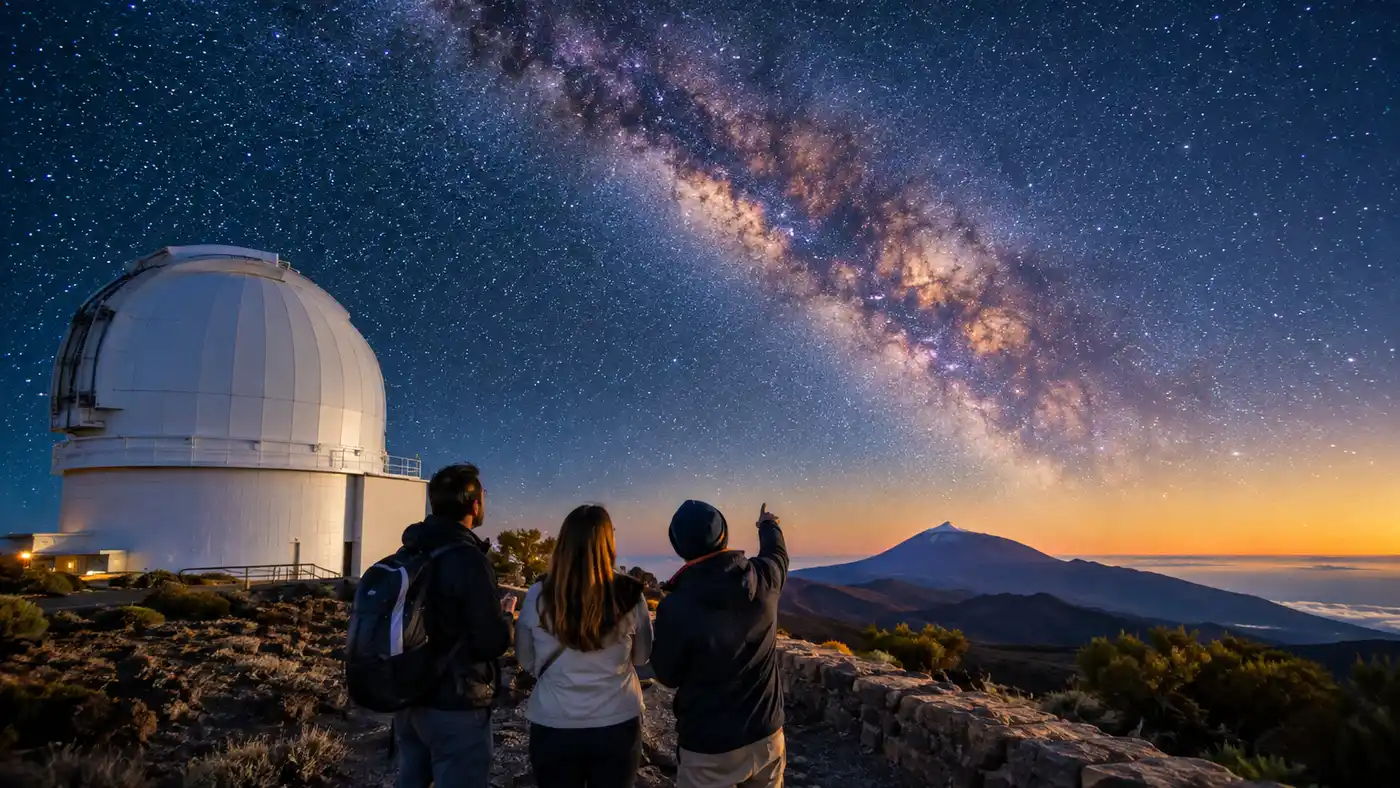
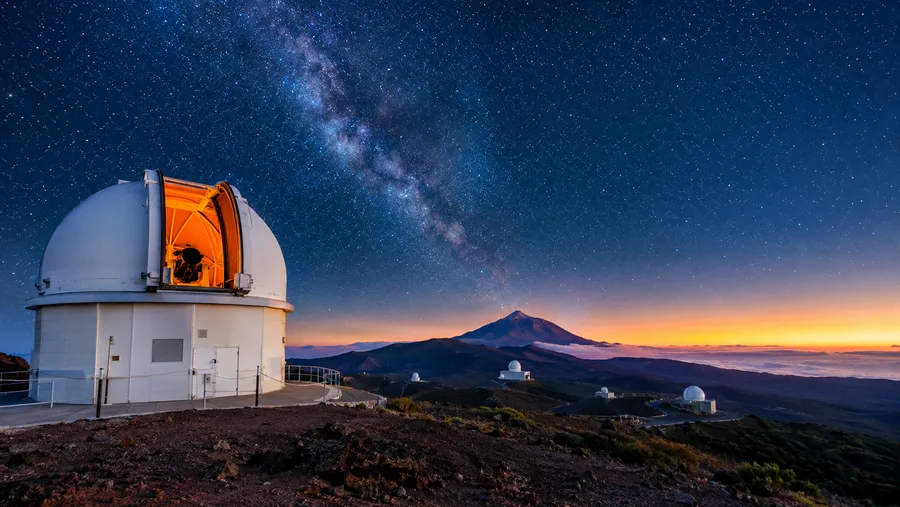
Driving up past the cloud line along the TF-24 spine road, the landscape bleeds from humid pine forest into pale yellow pumice and sharp volcanic scrub. Right around kilometre marker 37, you catch the first glimpse of the domes. Clustered against the red dirt like giant white golf balls dropped onto Mars, the teide observatory tenerife sits at 2,390 metres above sea level, clean and silent under a blinding Atlantic sky. Most tourists head straight for the cable car or rush up at dusk with a rental car, but booking a ticket into this working scientific station gives you a completely different perspective on the island.
The facility opened back in 1964 and quickly became one of the top locations on the planet for solar astronomy. The atmosphere up here is unusually thin, clean, and dry, which makes the sun look ferocious and turns the evening sky into velvet. If you are planning a visit, things can get a bit confusing because day visits are about high-tech physics while evening tours lean heavily into experiential astronomy. Here is an honest breakdown of how the tours work, what tickets actually cost, and whether you should bother booking one.
Book your stargazing tenerife experience:
What to Expect at Teide Observatory Tenerife
The first thing to understand is that you cannot simply walk in. Security at the front gate will turn you away without a pre-booked slot on an authorized guided tour. The compound is managed by the Instituto de Astrofísica de Canarias, and scientists from over 60 international institutions are running experiments inside those towers 24 hours a day.
A standard visit lasts about 90 minutes. You meet your guide at the visitor barrier, leave your car in the dirt parking strip outside, and walk in as a group. The walk covers maybe a kilometre and a half on rough volcanic gravel paths. If you have bad knees or struggle with thin air, you will feel it within ten minutes. Walking uphill at 2,400 metres feels surprisingly heavy on the lungs.
The standard tour moves through three distinct phases:
- The introductory workshop: a short talk inside an old dome about why Tenerife has some of the clearest skies in the world, backed by strict atmospheric protection laws enacted in 1988.
- Solar observations: stepping outside to peer through two portable solar telescopes equipped with specialized hydrogen-alpha filters, letting you spot solar flares and boiling sunspots in real time.
- Inside a research telescope: walking into the giant metallic hull of an actual nocturnal telescope, usually the IAC-80 or the TCS (Telescopio Carlos Sánchez), where you can smell the machine grease and hear the cooling fans hum.
Looking at the sun through a solar filter is strange. You expect a yellow disk, but through the eyepiece, it looks like a textured, crimson orange peeling with bright loops of burning gas hanging off the edge. Honestly, seeing a solar prominence looping thousands of kilometres into black space was cooler than looking at Saturn through a hobbyist scope.
Pro tip: Wear closed-toe walking shoes with real grip. The paths between domes are loose volcanic gravel, and the security staff will literally turn you away if you show up in flip-flops or open sandals.
Stargazing Tenerife Observatory Tours and Night Experiences
People get tripped up on this constantly: research domes do not host public stargazing nights. You will not be climbing up to look through the eyepiece of a multi-million-euro research telescope at midnight. Those instruments are linked to computerized digital sensors and spectrometers, not glass eyepieces for human eyes.
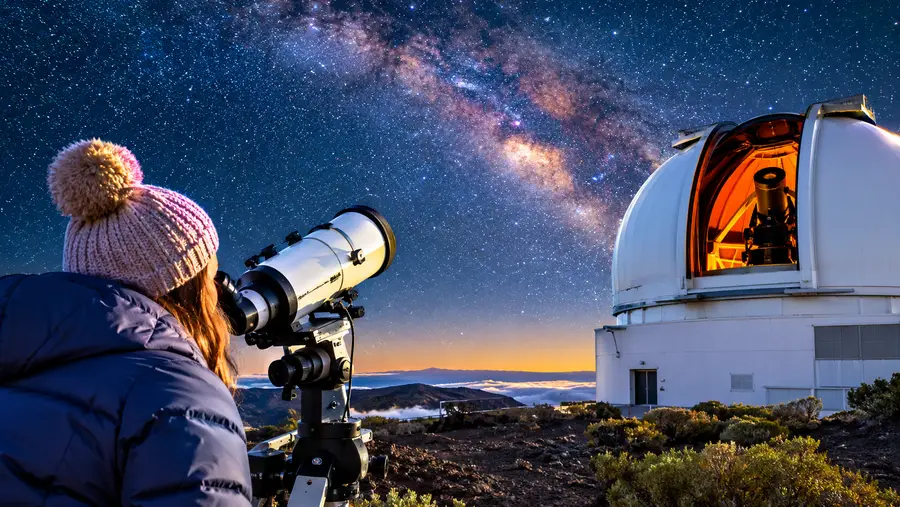
Instead, the mount teide stargazing tours operating around the observatory area bring their own high-end portable equipment. These evening tours gather near the visitor car park or at designated scenic viewpoints just down the road near Llano de Ucanca. The guides are usually Starlight-certified astronomers who set up 8-inch to 12-inch Dobsonian telescopes while the sun dips beneath an ocean of clouds.
The experience is still stunning. Because the observatory site was picked precisely for its lack of light pollution and laminar air currents, the Milky Way looks like a thick cloud of spilled milk stretching from horizon to horizon. If you go during moonless nights between June and September, the core of the galaxy glows bright enough to cast faint shadows on the rocks.
Some operators offer an extended afternoon-into-evening ticket. You tour the professional facilities around 4:00 PM, watch the sun set over La Gomera with a glass of local white wine, eat a rustic dinner at an altitude bodega, and then spend two hours tracking star clusters and nebulae through field telescopes. It makes for an eight-hour outing, but it saves you the stress of navigating twisting mountain roads twice.
Stargazing Tenerife Observatory Prices and Ticket Options
Pricing varies depending on whether you want a bare-bones day tour or a full transport package from the coastal resorts. Buying direct tickets for the daytime guided tour without transport is remarkably cheap, while organized night packages that include bus pickups from Playa de las Américas or Puerto de la Cruz quickly climb into three digits.
Here is how the stargazing tenerife observatory prices break down across the most common tour setups:
| Tour Experience | Approximate Cost | Duration | Includes Transport? |
|---|---|---|---|
| Daytime Guided Visit (Self-Drive) | €21 | 1.5 hours | No |
| Day Tour with Hotel Transfer | €42 - €55 | 4 - 5 hours | Yes |
| Day Tour + Sunset Stargazing Combo | €89 - €115 | 6 - 7 hours | Optional |
| VIP Small-Group Night Stargazing | €135 - €160 | 8 hours | Yes |
If you have a rental car, booking the basic €21 day ticket directly is easily the best value. The guides are bilingual, rotating between English, Spanish, and German at set times throughout the week. Paying an extra €30 just for a seat on a slow coach from Costa Adeje feels like a waste, especially when having your own wheels lets you stop at the viewpoints along the pine rim at your own pace.
If you prefer a full evening out without the stress of nighttime driving, the best stargazing tenerife observatory tours bundle transport, a bilingual astronomer, warm jackets, and a hot chocolate break. That last detail matters more than you think. The temperature drops fast up there.
Note: Children under 8 years old are strictly barred from the official daytime observatory tours for safety reasons, due to high-altitude exposure and industrial research equipment throughout the site.
Book your stargazing tenerife experience:
Booking Stargazing Tenerife Observatory Tickets: Practical Details
Ticket slots are capped tightly to keep group sizes around 20 to 25 people. In July and August, slots disappear two to three weeks out. Winter can be easier, but bad weather days cause a cascade of cancellations that clog up the following days. Book your spot the minute you lock in your flight details.
A few essential things to prepare before you set off:
- Original identification: security checks passports or national ID cards at the gate against your booking voucher. A photo on your phone usually works, but a physical document is safer.
- Layered clothing: even in July when Los Cristianos is baking at 31°C, the wind at the observatory can sit at 14°C, and in November it often plunges toward zero.
- Sun protection: the UV radiation at 2,400 metres is brutal. High-SPF sunscreen, sunglasses, and a brimmed hat are non-negotiable, even if the air feels cool.
- Drinking water: there are no vending machines, cafes, or public convenience stores inside the compound. Bring a full 1.5-litre bottle per person.
Getting up there requires some forethought. The drive from the south coast takes roughly 70 minutes via Villaflor along the TF-21, winding up through hairpin turns that will test your brakes. If you are coming from Santa Cruz or La Laguna, you will take the ridge road along the TF-24, which takes about 50 minutes and offers incredible views over the Orotava valley. If you want to explore the park after dark independently without joining a group, check out our guide on stargazing tenerife on your own for safe parking pull-offs.
Day vs Night: Choosing the Best Stargazing Tenerife Observatory Tours
People often ask me if the day tour is worth it if they already plan to go star hunting at night. They are two entirely separate experiences.
The daytime tour is an educational geek-out. You get access behind locked gates, listen to scientists talk about atmospheric physics, and stand inside giant white domes that look like movie sets. It is crisp, technical, and visually striking against the daytime desert panorama. If you are curious about engineering, solar science, or how telescopes are built, you will love it.
The night tours, on the other hand, are pure atmosphere. You stand in the pitch black listening to wind hiss across the volcanic rock while looking at deep-sky objects through amateur lenses. It feels romantic, ancient, and quietly humbling.
If your budget and schedule allow, do both. Book a 3:00 PM daytime observatory ticket, finish up by 4:45 PM, drive ten minutes down to the Parador for an early dinner or coffee, and then find a quiet viewpoint to watch the sunset before starting your night stargazing session. That gives you the complete picture of why this mountain is one of the astronomical capitals of the world.
Frequently Asked Questions about teide observatory tenerife
Can you visit Teide Observatory at night?
You cannot enter the professional research domes at night because scientists are actively working. Night stargazing tours operate outside the facility fence or at nearby staging areas in the national park, using high-powered portable telescopes.
How cold does it get at the observatory?
Temperatures can be 15°C to 20°C colder than at sea level. During summer afternoons it might hover around 18°C, but winter nights frequently drop below freezing with strong mountain winds.
Is the observatory accessible for people with limited mobility?
Partially. The main visitor path consists of loose volcanic stones and dirt ramps. While accessible parking is available, navigating the unpaved terrain between domes can be difficult for standard wheelchairs without assistance.
Quick Reference
- Elevation: 2,390 metres above sea level
- Standard day ticket: €21 per adult
- Tour length: 90 minutes
- Minimum age: 8 years old
- Driving time: 60-75 minutes from coastal resorts
Book your stargazing tenerife experience:
The Bottom Line
Touring the observatory is one of those rare Tenerife activities that feels completely removed from the tourist strips down on the coast. It is quiet, scientific, and a little rugged. Pay the €21, pack a windbreaker, drive up through the pine trees, and see the sun through a telescope that costs more than a family home. You will never look at the island's clear skies quite the same way again.
Read more about stargazing tenerife.