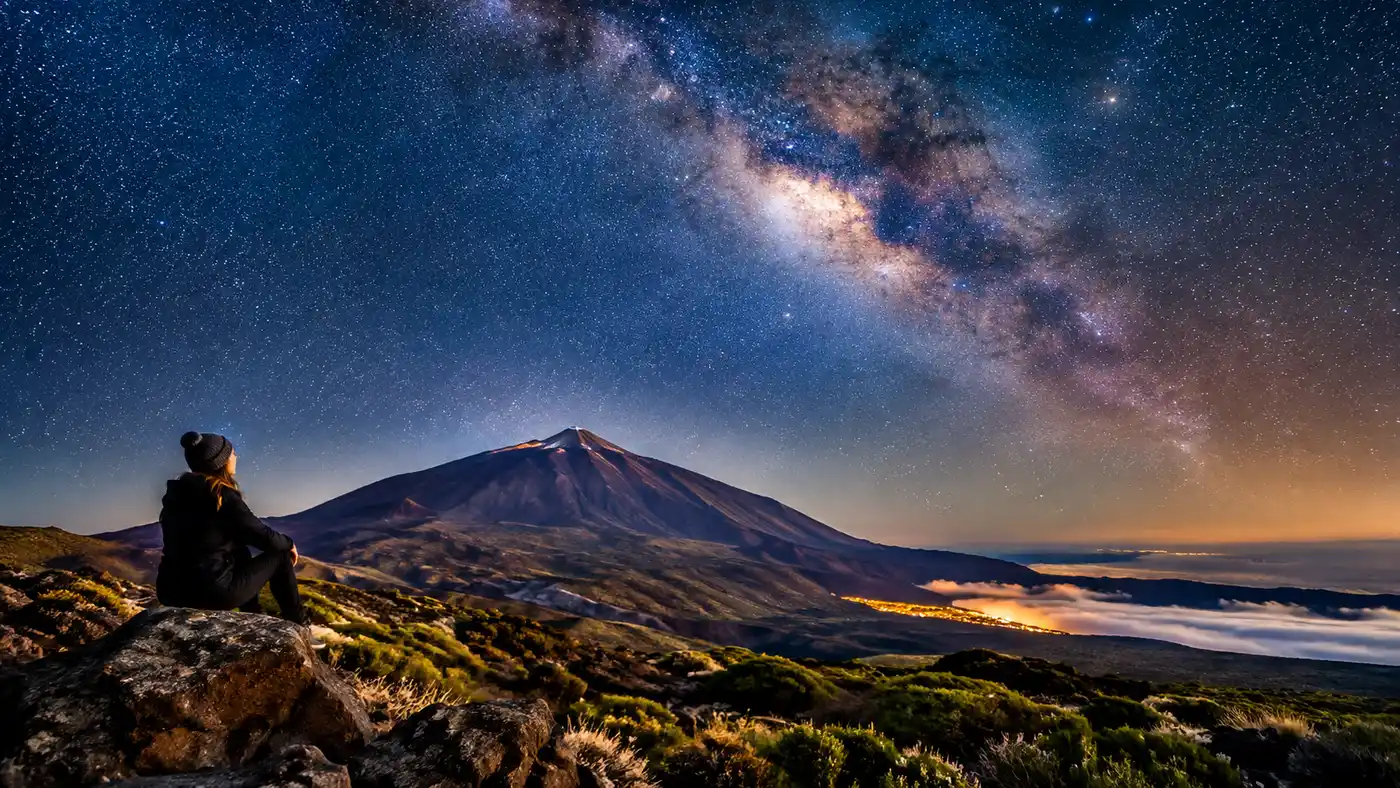
Best Time to Stargaze in Tenerife: Weather, Seasons & Forecast
You leave the sweltering beaches of Costa Adeje, put your rental car into second gear, and spend forty minutes winding up the switchbacks of the TF-21. Somewhere around 1,400 metres, a thick grey fog swallows your headlights. Keep driving. Five minutes later you burst through the top of the cloud blanket into clear, black air, and the volcanic crater of Las Cañadas spreads out beneath a dome of silent stars. Finding the best time to stargaze in tenerife is mostly about understanding this weird geography. The island sits in the Atlantic, but the high-altitude caldera lives in an entirely different climate system.
Planning a night under the Teide sky takes a bit of strategy. Coastal weather forecasts will lie to you because resort towns live under different atmospheric rules than the mountain peaks. Between the shifting Saharan dust, the lunar calendar, and cold winter winds that can drop temperatures below freezing at 2,000 metres, timing makes the difference between an unforgettable view of the galactic core and sitting in a freezing car surrounded by blinding fog.
Book your stargazing tenerife experience:
Seasons in Teide National Park: A Month-by-Month Breakdown
Summer brings the headline views. Between June and August, the core of the Milky Way arches directly overhead, looking like a bright, smoky rip across the velvet sky. The high caldera stays bone dry, with humidity often dipping below 10 percent. You can stand outside in a fleece jacket without shivering too violently, which makes long exposure photography much more pleasant. It is also the busiest period on the mountain. Rental cars pack out the roadside pullouts, and you will see laser pointers slicing through the dark until midnight.
Winter presents a sharp contrast. The air from November through February is exceptionally transparent, clean, and still. Atmospheric turbulence drops, which astronomers call good seeing. The downside is brutal cold. It might be 22 degrees on the beach in Los Cristianos, but Las Cañadas regularly plunges to minus 3 degrees Celsius once the sun sinks. Ice occasionally closes the higher access roads like the TF-24 along the ridge from La Laguna.
If you ask me, autumn strikes the sweet spot. For anyone considering stargazing tenerife november offers quiet roads, brilliant views of the Andromeda galaxy, and the annual Leonid meteor shower. The summer family crowds have gone home, leaving the volcanic viewpoints quiet and dark. Spring is equally good, especially in May when the rare red tajinaste plants bloom across the caldera floor, providing dramatic foregrounds for astrophotography.
| Season | Night Temp (Caldera) | Cloud-Free Nights | Sky Highlights | Wind Risk |
|---|---|---|---|---|
| Spring (Mar - May) | 2°C to 8°C | ~80% | Leo, Virgo, Tajinaste blooms | Moderate |
| Summer (Jun - Aug) | 10°C to 16°C | ~92% | Milky Way Core, Perseids | Low |
| Autumn (Sep - Nov) | 4°C to 11°C | ~85% | Andromeda, Taurids, Leonids | Low to Moderate |
| Winter (Dec - Feb) | -4°C to 4°C | ~75% | Orion, Sirius, Geminids | High |
Note: Winter storms occasionally bring heavy snow to the caldera between December and March. If snow hits, park authorities shut the TF-21 gates at Boca Tauce and El Portillo, blocking all vehicular access to the plateau.
Understanding the Tenerife Stargazing Forecast: The Cloud Sea and Calima
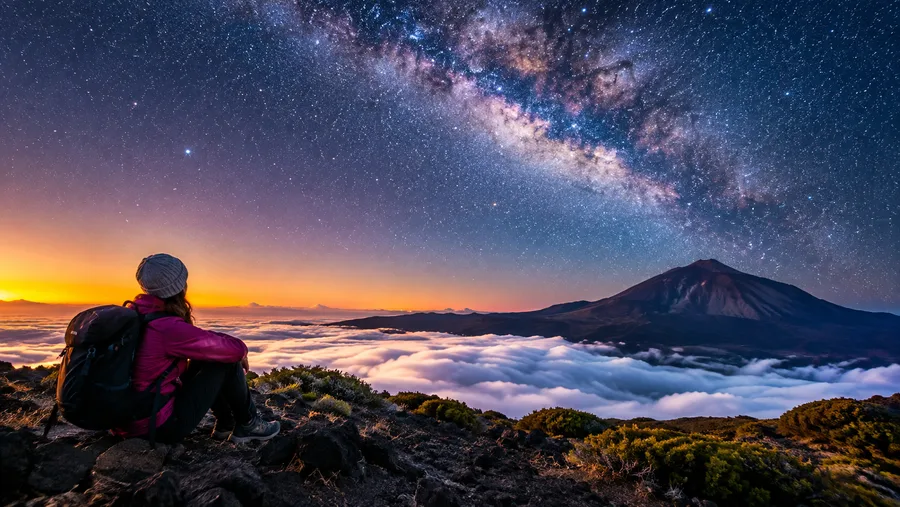
The secret behind Tenerife's dark skies is the trade wind inversion layer. Moist ocean air blows in from the northeast and gets trapped against the island's steep slopes between 800 and 1,500 metres. This creates the famous mar de nubes, or sea of clouds. Down in Puerto de la Cruz it might be overcast and drizzly, but the national park sits well above 2,000 metres. Up there, the air is arid and totally clear. The white carpet of clouds beneath your feet actually blocks city lights from coastal towns, serving as a giant natural light shield.
Normal weather apps will ruin your planning. If you check an app on your phone set to Teide or Adeje, it usually averages regional weather models and predicts rain or cloud cover that does not exist at high altitude. Reading a reliable tenerife stargazing forecast requires checking specialized mountain and astronomy tools. I look at mountain forecasts specifically measuring conditions at 2,200 metres, not sea level.
Then comes the calima. A few times each year, warm easterly winds blow off the Sahara desert, carrying massive plumes of fine mineral dust across the Atlantic. When a strong calima hits, the sky turns a milky yellow, visibility drops, and the stars vanish behind an orange haze. Calima events usually last three to four days. If you see one building on satellite maps, push your stargazing excursion back. No telescope can cut through a Saharan dust storm.
Pro tip: Check the public webcams at the IAC Teide Observatory or the Parador hotel around 5:00 PM before leaving your resort. If you see bright sunshine above a flat sea of white clouds, the night sky will be pristine.
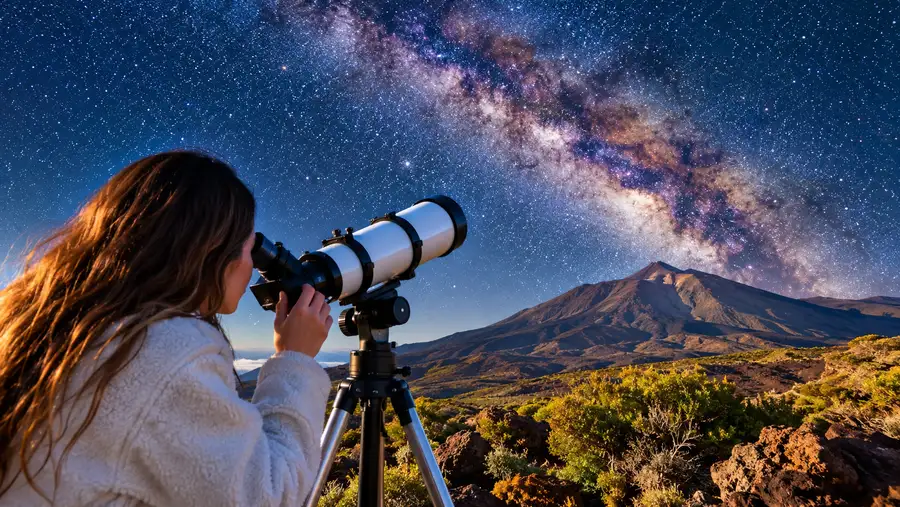
Moon Phases: Picking the Tenerife Best Stargazing Time
The moon dictates what you can see. Many travelers book their flights, reserve a rental car, drive up the volcano, and find themselves staring at a brilliant, searchlight-bright full moon. It is romantic, certainly. The volcanic rocks glow like a lunar landscape, and you can walk without a headlamp. But the bright glare washes out faint nebulae, the dust lanes of the Milky Way, and almost all shooting stars.
The tenerife best stargazing time for viewing deep space objects is during the new moon window. This covers roughly ten days each month, running from five days before the new moon to four days after it. During this window, the caldera plunges into ink-black darkness. Constellations appear with striking clarity, and the sky feels dense with stars you cannot see from mainland Europe.
If your holiday falls during a waxing or waning moon, you can still make it work by adjusting your hours. A half-moon sets around midnight during its first quarter, leaving the early morning hours pitch black. Conversely, during the third quarter, the sky stays dark after twilight until the moon rises later in the night. You just need to check the moonrise and moonset tables before heading out.
- New moon phase: Deep sky viewing, Milky Way photography, faint meteor trails.
- Crescent moon phase: Crater shadow viewing with small telescopes, subtle landscape illumination without washing out major constellations.
- Full moon phase: Night hiking across volcanic plains, lunar landscape photography, poor conditions for deep-sky stargazing.
Book your stargazing tenerife experience:
When to Plan Tours vs Heading Up Alone
Your choice between booking professional Mount Teide stargazing tours or driving yourself depends heavily on the season and your equipment. In peak summer, tour companies run daily excursions with giant Dobsonians and computerized Schmidt-Cassegrain telescopes. These guides understand the nuances of the sky and track objects you would never find with naked eyes or binoculars. If you have never looked through a 12-inch aperture at Saturn's rings or the core of the Hercules cluster, an organized tour is worth every cent.
Going alone offers real freedom, though. You can stay as long as you want, escape the chatter of other groups, and change spots if headlights bother you. For self-guided trips, the tenerife stargazing best time to visit viewpoints like Mirador de Chío or Llano de Ucanca is late evening, roughly two hours after sunset. That gives time for casual sunset watchers to pack up their picnic blankets and drive back down to the south coast.
The roads inside the park are paved, well-marked, and wide enough for two vehicles to pass easily. Still, driving at night requires sharp attention. You will encounter switchbacks, sudden drops on the shoulders, and the occasional rabbit or stray rock on the tarmac. Fuel up completely in Vilaflor or Chío before entering the park boundaries. There are no gas stations open at night up in the caldera.
Practical Timing: Hour by Hour at 2,000 Metres
Rushing up the mountain right at twilight is a classic mistake. The best stargazing nights begin well before the first star appears. Aim to arrive at your chosen turnout forty-five minutes before sunset. Watching the giant triangular shadow of Mount Teide cast eastward across the Atlantic towards Gran Canaria is worth the trip alone. The colours shift from orange to deep violet along the horizon, a phenomenon known as the Belt of Venus.
Once the sun dips, do not expect pitch blackness right away. Civil twilight fades into nautical twilight, which finally yields to astronomical darkness about seventy to ninety minutes after sundown. That first hour of true night is magical. Your eyes will take at least twenty minutes to adjust to the dark, so keep your phone screen in your pocket and switch any headlamps to red light mode.
- 6:30 PM - 7:30 PM: Arrive at the caldera, set up lawn chairs or cameras, watch the Teide shadow collapse across the cloud sea.
- 8:00 PM - 9:00 PM: Twilight transition, brightest planets appear first (Venus and Jupiter often dominate).
- 9:30 PM onward: True astronomical darkness begins, faint stars fill in, deep sky targets become visible.
- Midnight - 2:00 AM: The most stable atmospheric window, ideal for long exposures and visual telescope observing.
Take extra layers seriously, regardless of what the weather feels like down at the pool. A thermal base layer, heavy wool socks, a windbreaker, and gloves are non-negotiable. Sitting still on a camp chair at high altitude drains your body heat shockingly fast. Bring a thermos flask filled with hot coffee or tea. Honestly, standing on cold gravel for two hours without a hot drink will cut your stargazing session short faster than incoming cloud cover.
Frequently Asked Questions about best time to stargaze in tenerife
What month is best to see the Milky Way in Tenerife?
The summer months from June to August are ideal for seeing the bright galactic core of the Milky Way. It rises high in the southern sky during these months and remains visible for hours under stable, dry conditions.
Is stargazing good in Tenerife during the winter?
Yes, winter skies offer exceptional clarity and lower atmospheric turbulence, making Orion and the winter constellations look brilliant. You must dress for freezing temperatures, as night temperatures at 2,000 metres frequently dip below zero degrees.
How do I know if the Teide sky is clear before driving up?
Never rely on weather apps predicting coastal weather. Check mountain forecasts specifically for 2,000 metres on AEMET or Mountain-Forecast, or check the live webcams at the Parador de Las Cañadas and the Teide Observatory before heading up the mountain.
Does the full moon ruin stargazing in Tenerife?
A full moon will wash out faint objects, deep-sky nebulae, and the Milky Way dust lanes with its intense light. For deep sky stargazing, target the new moon window, five days before to four days after the new moon.
Quick Reference
- Peak Milky Way viewing: June through August
- Cleanest atmospheric seeing: November through February
- Caldera temperature range: -4°C in winter to 16°C in summer
- Optimal dark-sky window: 5 days before to 4 days after the new moon
- Altitude sickness warning: Las Cañadas sits above 2,000m, stay hydrated
Book your stargazing tenerife experience:
My Take
There is no bad month to look up at the sky in Tenerife, provided you steer clear of the full moon and Saharan calima dust. If I had to pick one single week to head up to the caldera, I would pick a late September new moon. The nights are mild, the Milky Way core is still visible right after twilight, and the massive tour buses have thinned out. Pack a warm parka, grab a thermos of coffee, and give your eyes half an hour to adjust. Once the sky opens up, you will realise why astronomers from all over the world build their giant mirrors on these quiet volcanic ridges.
Read more about stargazing tenerife.